“One of the marvellous things about community is that it enables us to welcome and help people in a way we couldn’t as individuals. When we pool our strength and share the work and responsibility, we can welcome many people, even those in deep distress, and perhaps help them find self-confidence and inner healing.”
Jean Vanier
In my previous blog we started to explore some of the potential barriers which may be hampering the realisation of the approaches identified and recommended in key reports such as the Christie Commission Report (2011) and policy; The Community Empowerment Act (2015). Why when we can see opportunities for such transformational approaches has there been so little progress made in implementing these proposals?
Having discussed some of the potential challenges around shifting the balance of power I wanted to examine empowerment itself, a little.
If approaches to empowerment are cherry picked to fit a particular agenda will it be a force for positive social change?
There is a risk that such approaches can quietly conform to the interests of strong actors or with the status quo. Empowerment can be open to selective interpretation (Jethro Pettit 2012).
A year on from the start of “Lockdown” which prompted many of our communities into action to respond to the emergency situation, many of the ‘pop up’ Community Larders and Hubs are still running full steam ahead. We are grateful that these groups have been able to access resources, food, funding, community spaces to ensure they have been able to improve life for those in need within their communities. As the COVID19 crisis has become less acute it is clearly emerging that there is need which reaches beyond that which has been caused by the pandemic. If we are to let this approach continue, are we at risk at enabling individuals to better adapt to profoundly unfair sets of circumstances without tackling the conditions that produce poverty and inequality in the first place?
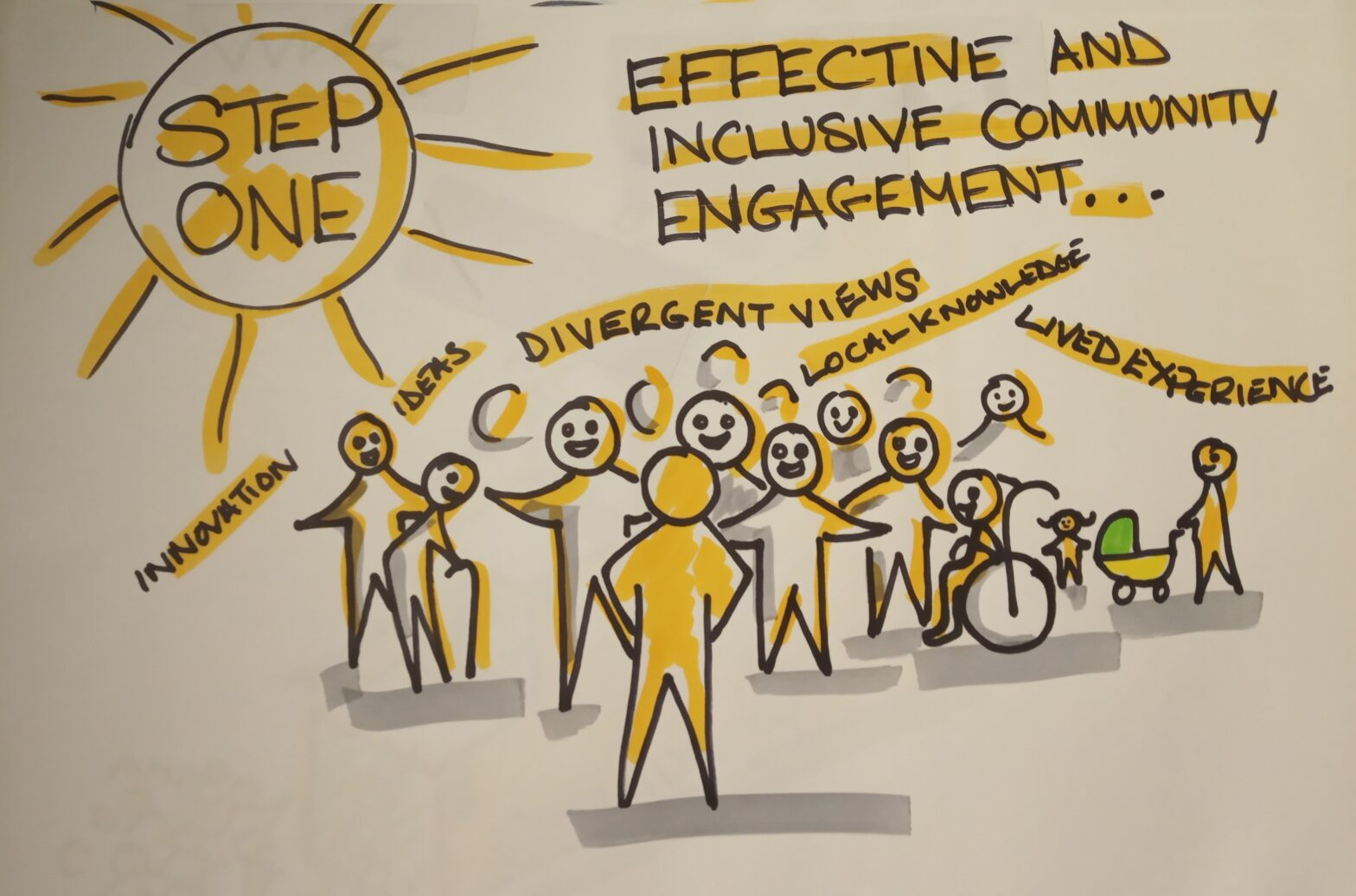
This community response to the pandemic has not only highlighted the power of community but forces us to challenge the status quo. Another example of the need for authentic Community Engagement and Participation can be seen in a town with a population in the top five in the region is only now seeing the realisation of what is known as a “cut price” Supermarket after years of resistance. Ironically, this town has and continues to run three Food Banks/Larders, one of which cites 400+ visitors a week. The challenge with community engagement, is how do we reach our community members who are operating at the lowest levels of Maslow’s Hierarchy of Needs, when it is all they can do is to survive another day trying to put food on the table? They won’t be queuing up to attend the local Community Council meeting or a community forum. When we get this wrong the outcome of engagement skews towards those who are best placed to engage rather than those we really need to reach. In areas where there is such inequity and inequality the gaps just keep getting wider.
We need to adopt approaches that are inclusive and far reaching. How we do that is still a work in progress but through local community action coming out of the pandemic we are becoming better informed about our communities. This better understanding may offer routes to reach our more marginalised members of society and be able to better include them in future engagement. We should be looking at initiatives which seek to empower people out of poverty rather than reaffirming such inequalities.
We need to aim for more ‘socially transformative empowerment’, engaging stakeholders in a process of clarifying the political and social intent of an empowerment initiative.
We are hoping to “build back better” as we come through the pandemic, but we have to prepared to think and do things differently.